 |
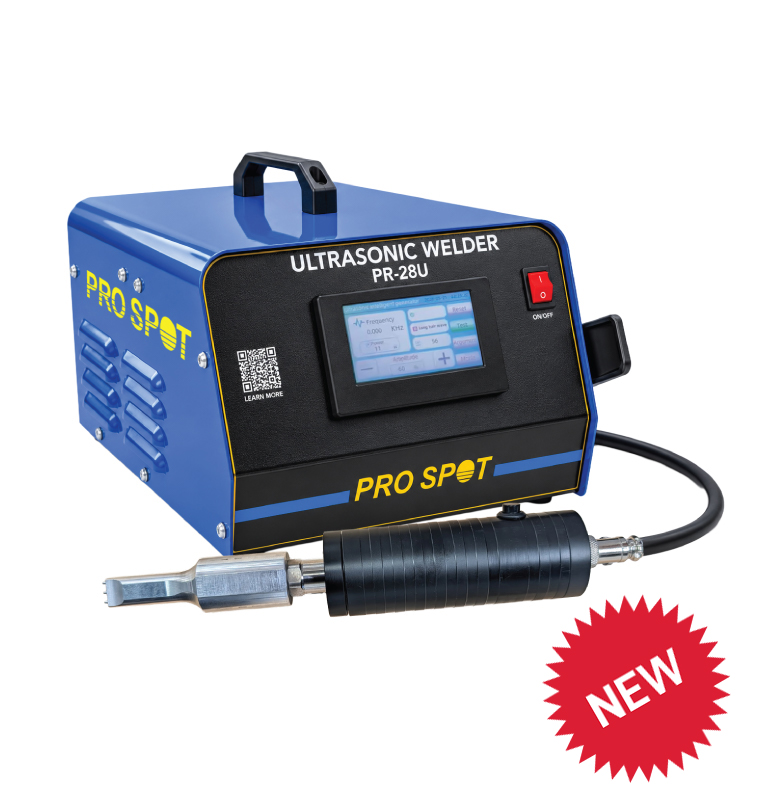
Fast, portable solution for repairing and welding bumpers, brackets, and automotive plastic components. Ultrasonic technology provides instant, strong bonds without filler materials or preheating time. Ultrasonic Plastic Welder Brochure - 1.7 MB Component List - Coming Soon Manual - Coming Soon |
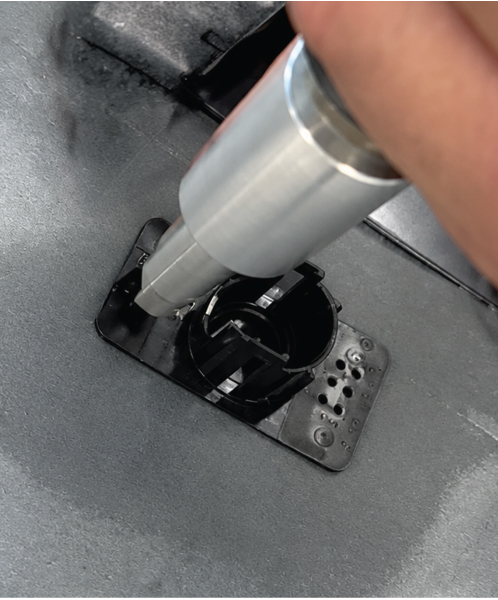
- Ultrasonic Joining: Restores small brackets, mounts, clips, tabs, and trim without adding visible filler mass or extensive heat distortion.
- Power Reserve: Operates at 28.5 kHz with >800 W electrical power, offering over 33% more energy than typical 600 W / 40 kHz competitor systems for demanding thermoplastics.
- Process Qualification: Complements nitrogen/hot-air welding; does not universally replace OEM repair procedures or guarantee blanket approval.
Applications
|
|
Material Energy Requirements:
- Amorphous Plastics (ABS, PC): ~200 W at 1 mm up to ~1,000 W at 5 mm.
- Semi-Crystalline Plastics (PP, PA): ~400 W at 1 mm up to ~2,000 W at 5 mm (requires ~2x the power of amorphous materials).
Optional Sonotrodes (Horns)
Quick and easy to change, optional sonotrodes screw directly onto the handpiece’s transducer/booster assembly. Their threaded design allows for fast, tool-free installation and replacement by hand, making it easy to switch between different welding applications.
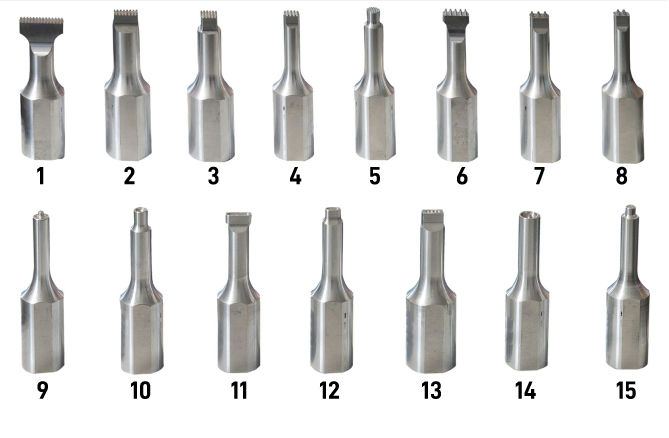
- #1 to 5:Primarily designed for standard plastic repair (e.g., crack mending, fusing two pieces of the same thermoplastic material together).
- #6 to 8: Used for attaching new plastic elements onto existing components. For example, #7 is frequently used in body shops to weld parking sensor brackets onto replacement bumpers.
- #11 to 13: Specialized for heat-staking / flattening plastic pins and rivets to secure components together. For instance, #13 is commonly utilized in OEM-style procedures (such as by Stellantis) for securing bumper grilles.
- #14: Used for structural welding of larger or specific multi-component plastic assemblies. For example, #14 (and similar variants in this range) is often applied when joining the plastic inner panels that support speaker housings inside vehicle doors.
Ultrasonic Joining vs Nitrogen Welding Comparison
| Criterion | Ultrasonic Joining | Hot-Air / Nitrogen Welding |
|---|---|---|
| Primary Mechanism | Localized frictional heating & pressure at joint interface | External heating and fusion with compatible filler rod |
| Best Suited For | Small brackets, sensor mounts, clips, rivets, bosses, tabs | Cracks, tears, missing sections, large surface rebuilds |
| Filler Material | None required for compatible mating parts | Requires compatible plastic filler rod |
| Heat Exposure | Concentrated at contact sonotrode area | Broader thermal zone around weld bead |
| Surface Finish | Clean, localized weld with minimal build-up | Weld bead requires grinding, sanding, refinishing |
Technical Specifications
| Power Supply: | 110V AC ±10% / 60 Hz |
| Plastic Compatibility: | PP, ABS, PC, PE, PA & Blends |
| Operating Frequency: | 28.5 kHz (28–35 kHz Range) |
| Peak Power Output: | >800 W High-Reserve Output |
| Weld Operating Modes: | Timed Pulse & Continuous |
| System Net Weight: | ~14.3 lbs (~6.5 kg) |
Comments
0 comments
Article is closed for comments.